By Miss Kianna Gittens, Registered Physiotherapist
A Practice Rooted in History
Pilates was developed by Joseph Hubertus Pilates. During World War I, Joseph worked as an orderly in a hospital, where he began experimenting with ways to help injured soldiers regain their strength. He created a system of supported exercises for patients who were too weak to stand by attaching springs to hospital beds. Both Joseph and the doctors noted that the soldiers seemed to recover faster with his intervention.
Originally called Contrology, his method drew inspiration from yoga, martial arts, meditation, and classical Greek and Roman exercises. This unique practice was brought to the United States in 1923 and adapted over time into what we now know as Pilates.
What Exactly Is Pilates?
Pilates is a form of exercise that focuses on the mind-body connection. It emphasizes controlled movements, proper breathing, and strengthening the muscles that support posture and stability. Unlike high-impact workouts, Pilates is gentle on the joints yet highly effective at building strength and flexibility.
The Six Guiding Principles
Pilates is built on six main principles: breathing, rib cage positioning, spinal alignment, pelvic positioning, shoulder stability, and neck alignment.
- Breathing: Conscious breath control improves oxygen intake and deepens the connection between mind and body. Breathing in through the nose helps lengthen the spine, while breathing out through the mouth engages the core.
- Rib cage positioning: Keeping the rib cage down during movement helps maintain abdominal engagement and supports the spine.
- Spinal alignment: The spine has natural curves. Pilates encourages gentle adjustments — such as flattening the lower back — to activate core muscles and promote stability.
- Pelvic positioning: Tucking the tailbone under tilts the top of the pelvis backward, which helps activate the core.
- Shoulder movement and stabilization: Setting the shoulders in place before moving the arms reduces strain and builds upper-body control.
- Neck alignment: Keeping the neck in a neutral position — with just enough space for a fist between the chin and chest — protects the neck muscles from unnecessary tension.
Why Pilates Works
When practiced with these principles, Pilates provides a range of physical and mental benefits, including:
- Core strength: The core includes the transversus abdominis, multifidus, diaphragm, and pelvic floor muscles, which work together to stabilize the body. A strong core improves balance, enhances stability, and reduces the risk of back pain.
- Posture improvement: By correcting imbalances and strengthening support muscles, Pilates helps people stand taller and move with greater ease.
- Body awareness: Pilates encourages mindfulness of how the body moves, creating better coordination and reducing the risk of injury.
- Flexibility and mobility: Gentle stretching and controlled movements keep joints supple and muscles lengthened.
- Stress relief: The combination of mindful breathing and focused movement has a calming effect, reducing stress and improving mental clarity.
Mat vs. Reformer: Two Ways to Practice
Pilates can be practiced in two main ways:
- Mat Pilates: Uses body weight and sometimes small props like resistance bands or balls. Exercises can be adapted to different fitness levels and don’t require specialized equipment.
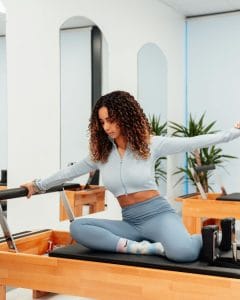
- Reformer Pilates: Performed on a machine with a sliding carriage, springs, and pulleys. The Reformer offers more resistance and support, allowing for a wide variety of movements that can be both challenging and dynamic.
Both forms are effective. The choice depends on personal preference, fitness goals, and access to equipment.
Pilates for Every Body
One of the greatest advantages of Pilates is its adaptability. It can be practiced lying down, sitting, standing, or with assistance from equipment, making it suitable for a wide range of people — from beginners to athletes. Whether your goal is to improve posture, recover from an injury, build strength, or simply enjoy a low-impact way to move, Pilates can meet you where you are.
Safety First: When to Be Cautious
As with any form of exercise, there are situations where caution is needed. Pilates is not recommended for people with unstable fractures, certain heart conditions, pre-eclampsia during pregnancy, or immediately after surgery. In cases such as a recent disc injury, modifications may be required. It is best to work with a trained instructor who can tailor the exercises to your specific needs.
More Than Just Exercise
Pilates is more than just an exercise method; it’s a holistic approach to health. Rooted in history yet highly relevant today, it teaches us to move with strength, balance, and control. Whether practiced on a mat at home, in a studio, or on a Reformer, Pilates is accessible, adaptable, and rewarding.